PURE WOOD THROUGH DIGITAL MANUFACTURING
nurholz combines traditional woodworking with modern manufacturing. Our patented glue- and metal-free wood joints allows for individually adaptable, expandable, and repairable furniture construction.
nurholz focuses on eco-effectiveness with the aim of a consistent circular economy.
CHAIR
bent
2025
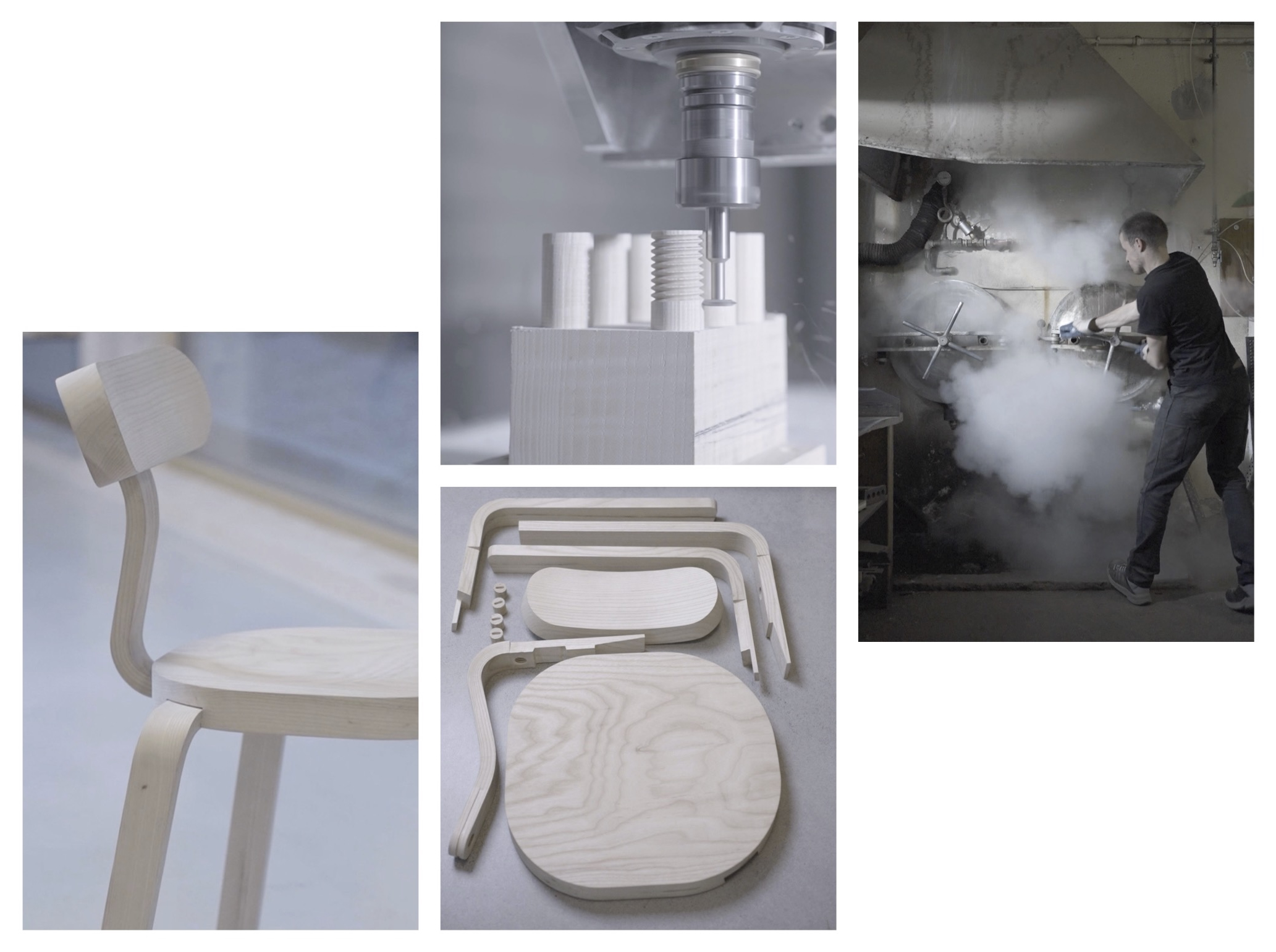
bent is a glue- and metal-free, stackable chair that
combines the endangered craft of steam bending
with modern manufacturing. The joinery is achieved
entirely via wooden threads, which wedge the parts
together.
Material: ash
BENCH / TABLE
monoki 12
2026
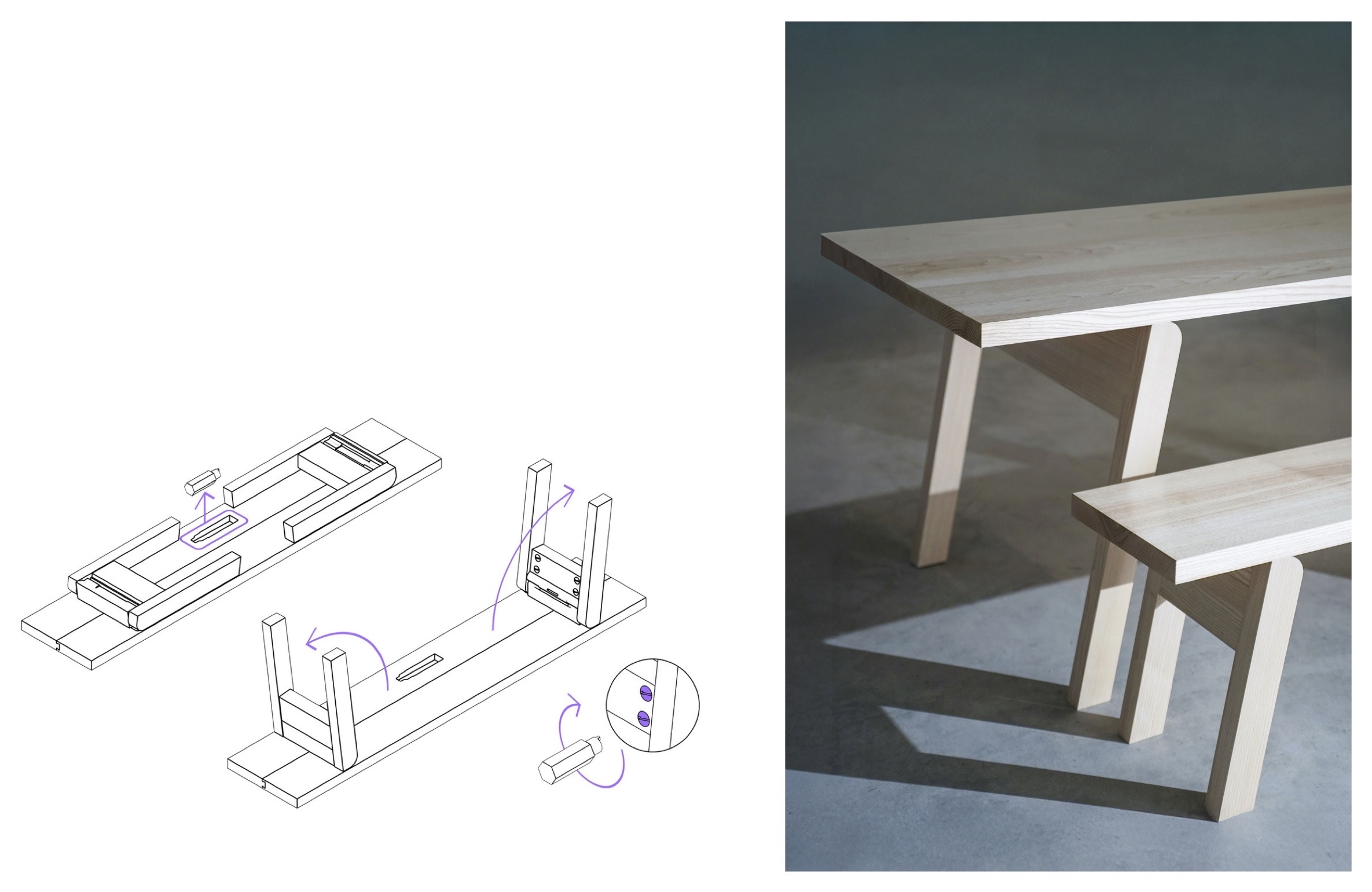
monoki 12 (bench monoki 1, table monoki 2) is a fol-
dable, glue- and metal-free seating set, designed for
hospitality and home use. Reversible wood joints
make monoki a repairable, material-appropriate, and
fully circular product. The form derives primarily from
the construction method, the material properties, and
the function.
The name monoki combines mono (Ancient Greek:
“single, from one source”; Japanese: “thing, object”)
and ki (Japanese: “tree, wood”), a reference to mono-
material concepts and Japanese woodworking.
Material: ash
WHY NURHOLZ?
Beyond the obvious reason of maintaining consistent
material purity, nurholz expands traditional woodwor-
king through advanced and model-based manufactu-
ring. This creates a new level of structural and func-
tional possibilities.
Instead of bypassing wood’s natural properties (such
as hygroscopicity and anisotropy), they are integra-
ted into the design and manufacturing process. The
result is a circular, adaptable, and durable building
system that translates traditional craft principles into
digital processes.
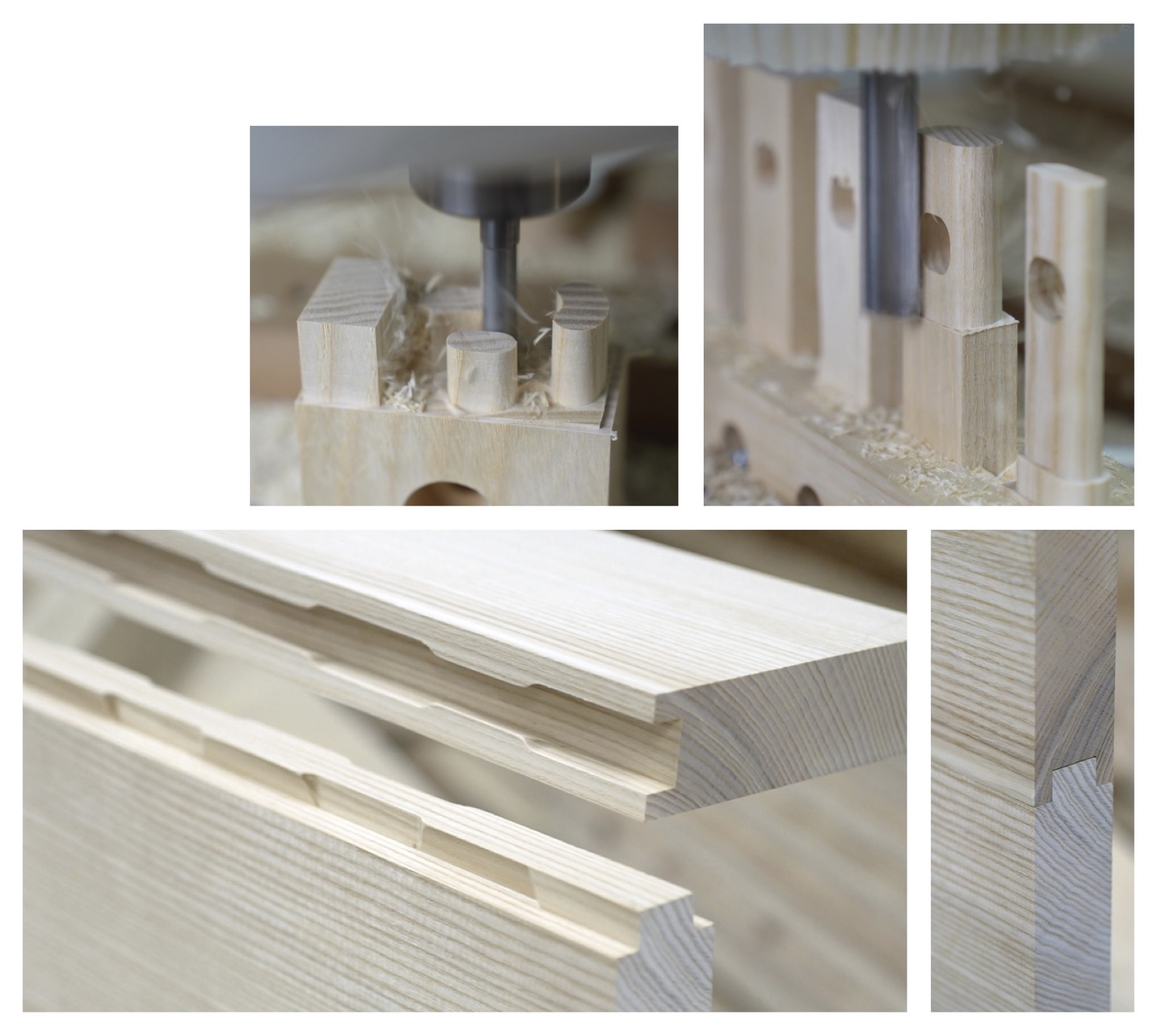
For example, a wedge becomes a rotatable eccen-
tric, which allows re-tightening of a joint as the wood
moves. The four tenons of the concealed wood joint,
through their shape and arrangement, ensure that
the clamping force does not loosen during swelling
and shrinkage but increases.
WOOD JOINTS
2022 – 2025
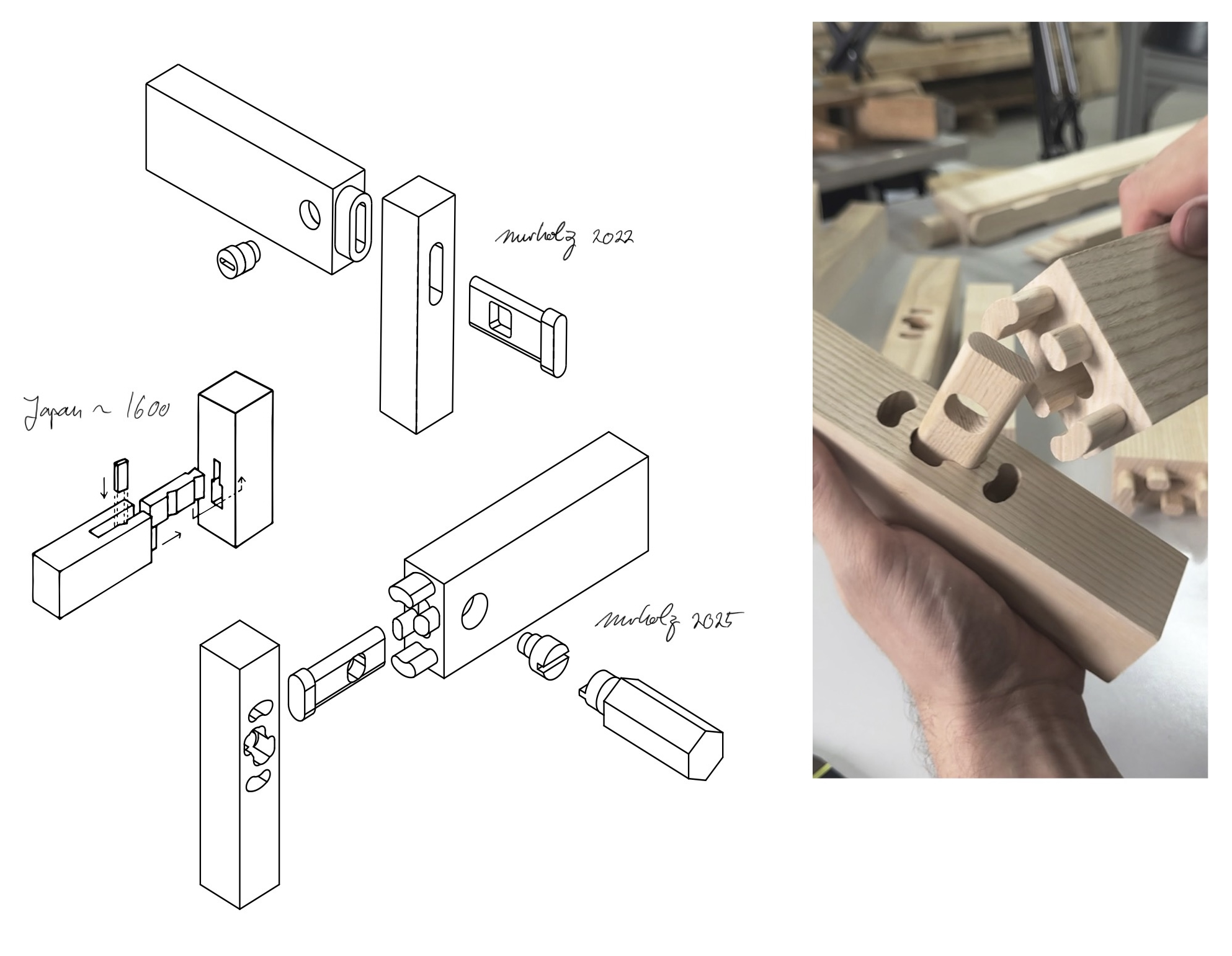
The traditional Japanese wood joint “Yatoi Hozo” from
the 17th century forms the basis of the first nurholz
tenon joint designed for milling (2022). Using the
same principles, a concealed joint was developed in
early 2025.
Applied in the current design: monoki 12
Materials: pine, beech / ash
BACKGROUND
nurholz
Material purity through digital manufacturing
2023
Inspired by Cradle to Cradle, traditional woodwor-
king, and emerging technologies, a glue-free, digi-
tally manufacturable wood joint was developed. This
marked the beginning of the nurholz (German for
‘only wood’) concept, characterized by innovations
at multiple levels.
Glue-free wood joints make furniture and interior
concepts customizable, extendable, and repairable.
The focus is eco-effectiveness with the aim of a con-
sistent circular economy.
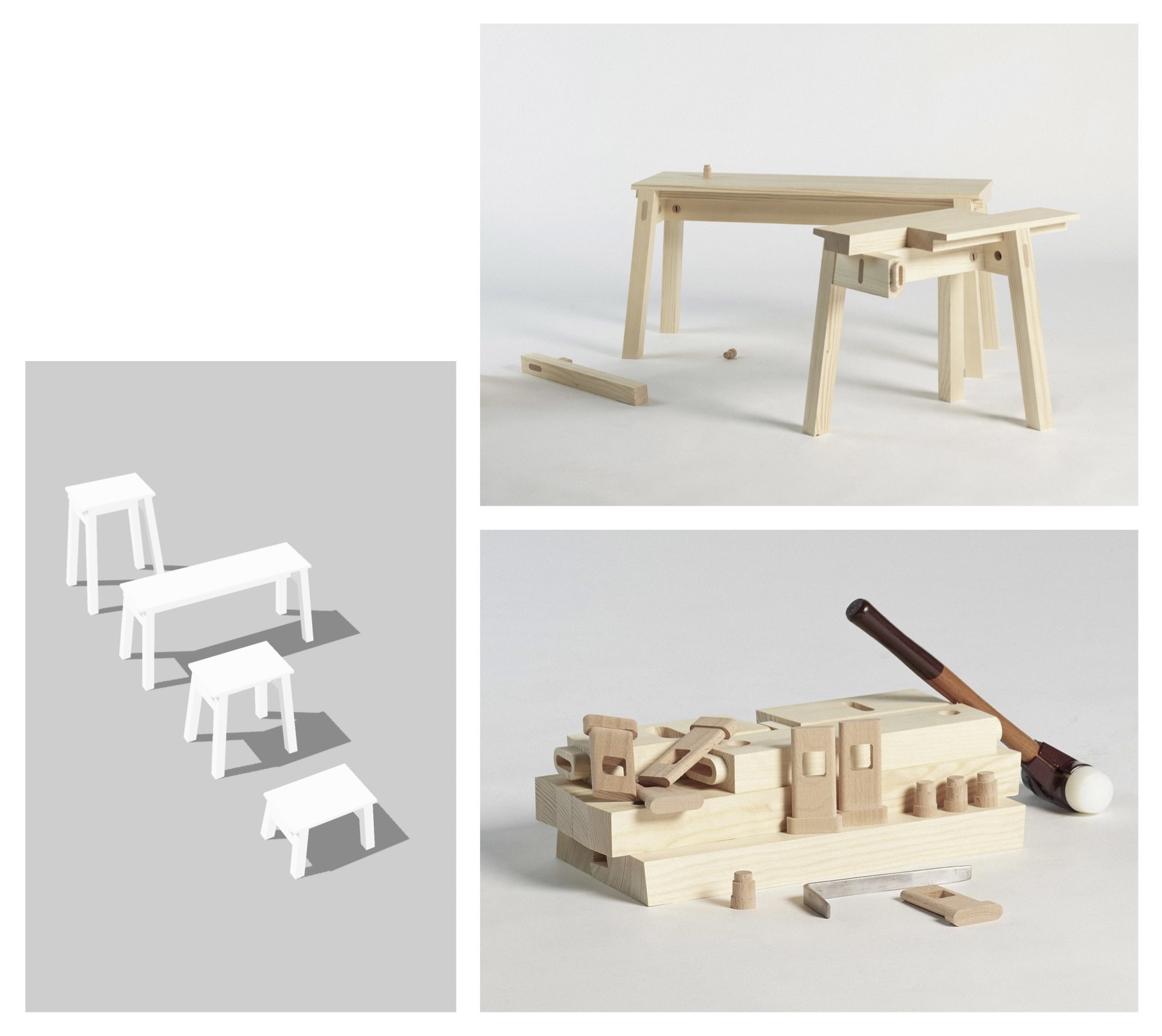
As an exemplary design, a simple stool in leg-and-
rail construction was developed. The construction
enables the parameterization of all components for
ergonomics and function, avoiding major toolpath
reprogramming. This makes it possible to produce
a footstool, a stool, a bench, a bar stool, or a table in
custom dimensions.
Materials: pine, beech
Copyright © 2026 nurholz. All rights reserved. Imprint Privacy Notice
PURE WOOD THROUGH DIGITAL MANUFACTURING
nurholz combines traditional woodworking with modern manufacturing. Our patented glue- and metal-free wood joints allows for individually adaptable, expandable, and repairable furniture construction.
nurholz focuses on eco-effectiveness with the aim of a consistent circular economy.
CHAIR
bent / 2025
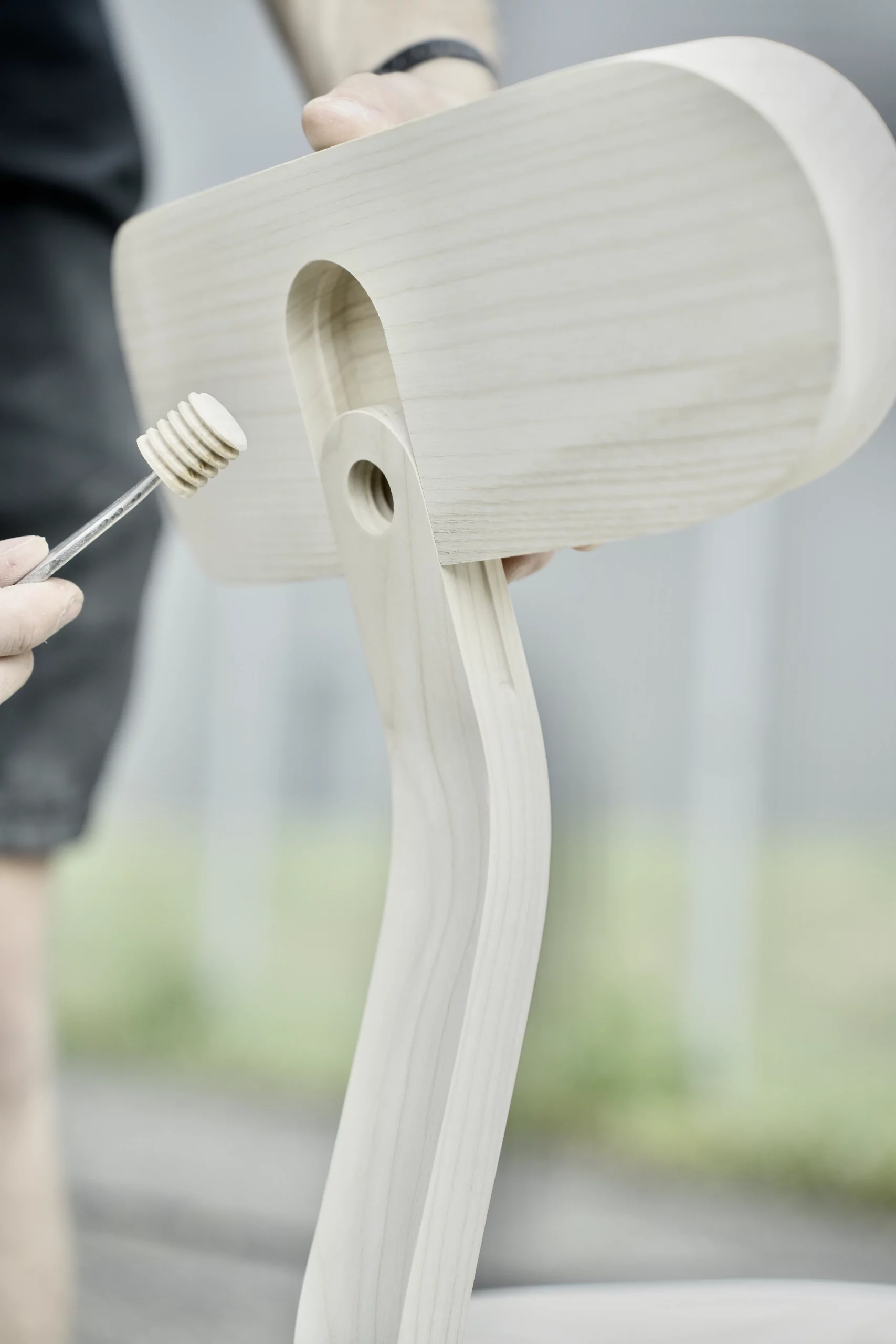
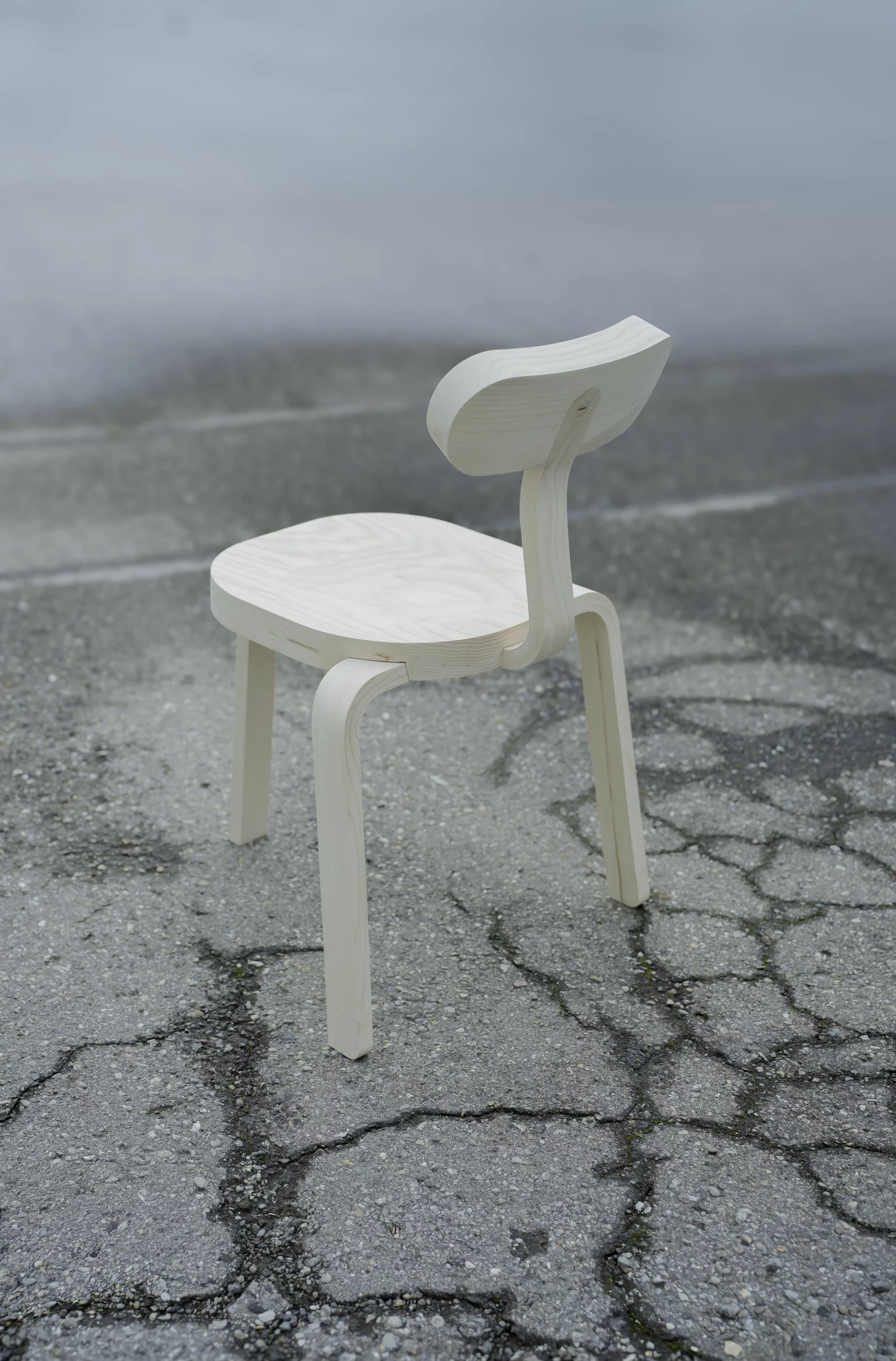
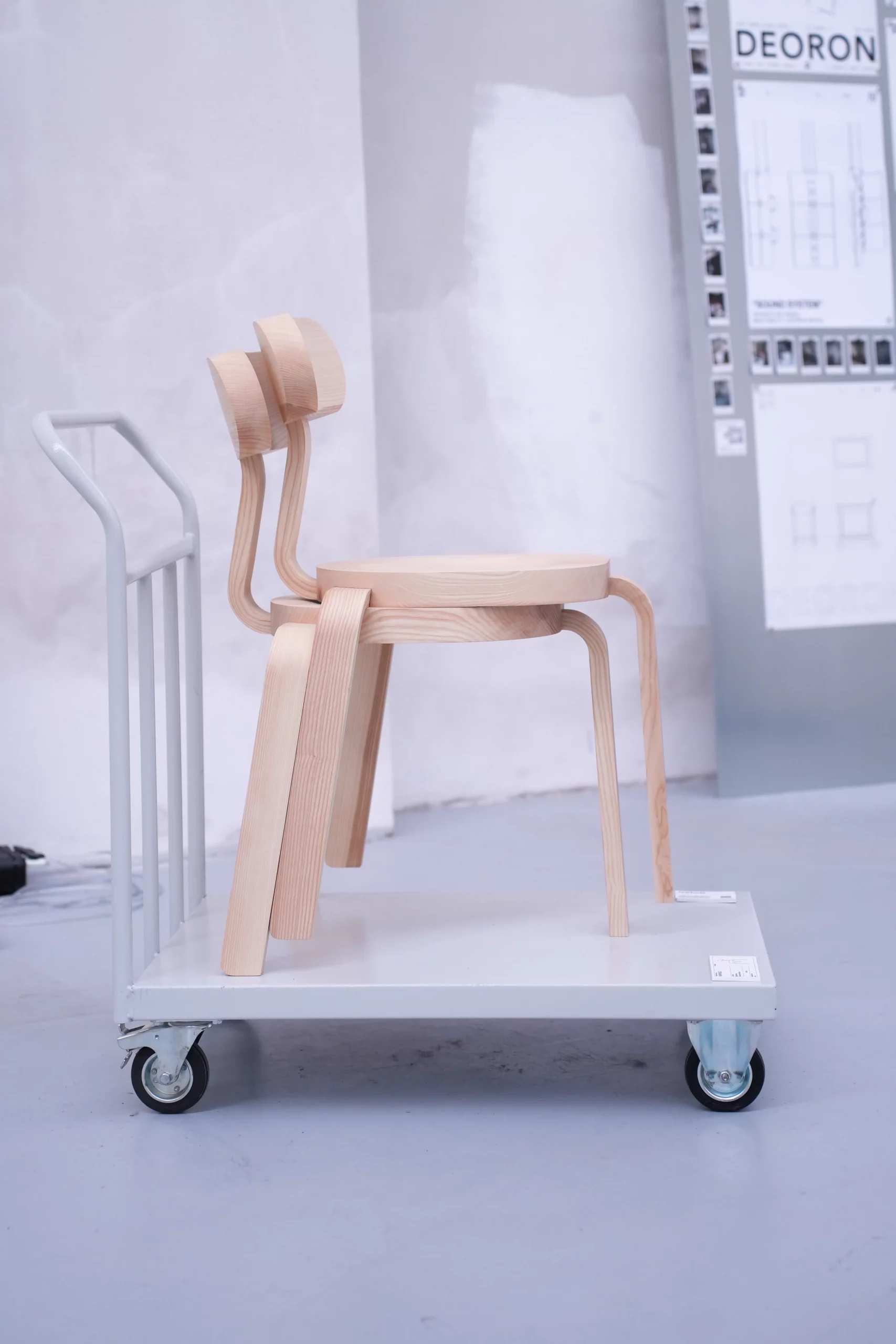
bent is a glue- and metal-free, stackable chair that
combines the endangered craft of steam bending
with modern manufacturing. The joinery is achieved
entirely via wooden threads, which wedge the parts
together.
Material: ash
BENCH / TABLE
monoki 12 / 2026
monoki 12 (bench monoki 1, table monoki 2) is a fol-
dable, glue- and metal-free seating set, designed for
hospitality and home use. Reversible wood joints
make monoki a repairable, material-appropriate, and
fully circular product. The form derives primarily from
the construction method, the material properties, and
the function.
The name monoki combines mono (Ancient Greek:
“single, from one source”; Japanese: “thing, object”)
and ki (Japanese: “tree, wood”), a reference to mono-
material concepts and Japanese woodworking.
Material: ash
WHY NURHOLZ?
Beyond the obvious reason of maintaining consistent
material purity, nurholz expands traditional woodwor-
king through advanced and model-based manufactu-
ring. This creates a new level of structural and func-
tional possibilities.
Instead of bypassing wood’s natural properties (such
as hygroscopicity and anisotropy), they are integra-
ted into the design and manufacturing process. The
result is a circular, adaptable, and durable building
system that translates traditional craft principles into
digital processes.
For example, a wedge becomes a rotatable eccen-
tric, which allows re-tightening of a joint as the wood
moves. The four tenons of the concealed wood joint,
through their shape and arrangement, ensure that
the clamping force does not loosen during swelling
and shrinkage but increases.
WOOD JOINTS
2022 – 2025
The traditional Japanese wood joint “Yatoi Hozo” from
the 17th century forms the basis of the first nurholz
tenon joint designed for milling (2022). Using the
same principles, a concealed joint was developed in
early 2025.
Applied in the current design: monoki 12
Materials: pine, beech / ash
BACKGROUND
nurholz
Material purity through digital manufacturing
2023
Inspired by Cradle to Cradle, traditional woodwor-
king, and emerging technologies, a glue-free, digi-
tally manufacturable wood joint was developed. This
marked the beginning of the nurholz (German for
‘only wood’) concept, characterized by innovations
at multiple levels.
Glue-free wood joints make furniture and interior
concepts customizable, extendable, and repairable.
The focus is eco-effectiveness with the aim of a con-
sistent circular economy.
As an exemplary design, a simple stool in leg-and-
rail construction was developed. The construction
enables the parameterization of all components for
ergonomics and function, avoiding major toolpath
reprogramming. This makes it possible to produce
a footstool, a stool, a bench, a bar stool, or a table in
custom dimensions.
Materials: pine, beech
BED


johannes braa
michael mahle
Copyright © 2026 nurholz. All rights reserved. Imprint Privacy Notice